

Canada
Rocky Mountains
2024: August 19 – September 3
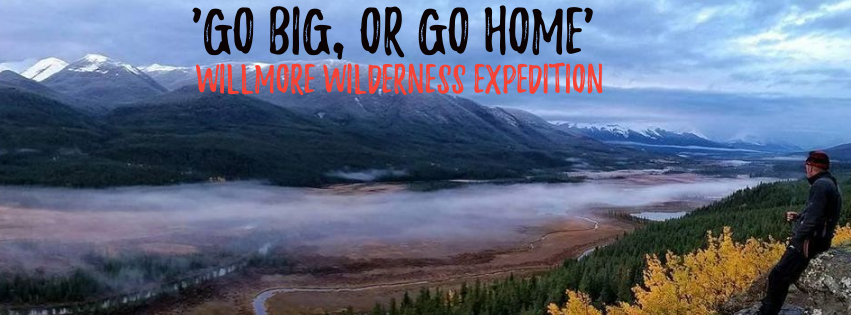
Preparatory day hikes in Banff National Park and Jasper National Park, with a final 10-day trek in Willmore Wilderness. This trek is Remote Expedition style. This trip is therefore only suitable for well-prepared and trained participants.
Costs: € 2100,-
Including 2 preparatory training sessions (weekend) on the Voshaar.

To complete the pre-registration, you must buy a ticket to complete the reservation.
This costs € 150,-
If you cancel before June 1, 2023, you will receive a full refund.
Pre-registrations therefore have priority until the final registration starts.

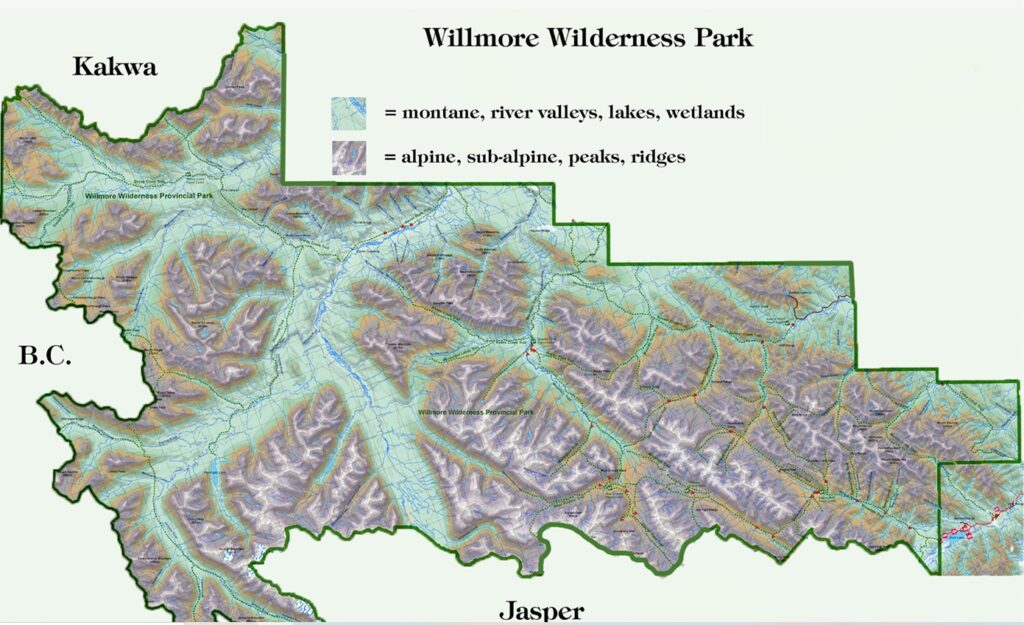
Ancient glaciers, high mountain peaks, thick forests and raging rivers define these 4,597 square kms of untamed wilderness. Backpackers and horseback riders seeking a true backcountry experience can explore over 750 km of trails where wildlife abounds. Visitors to Willmore must be experienced and well-equipped for backcountry adventure.
History
History reveals that the first Iroquois hunters had come from the East in the 1790s in the employ of the fur trading companies. Once their contract was over, some decided to stay and married local Cree and Métis women. One group settled in the upper Smoky Lake region, just east of Jasper Park, and maintained friendly relations with the local Shuswap. After the last Shuswap died off, the Iroquois expanded their range into the mountain area and remained there until 1910, when Jasper National Park was created and all squatters were evicted. These Iroquois families then moved to the Grande Cache area where many of their descendants remain today.
Ignace Wanyandie and Louis Karakuntie were two of the first Iroquois voyageurs that traveled west with the North West Company. Ignace Wanyandie was married to a beautiful Métis woman called Marie Walker. Ignace and Louis were canoe and boatmen paddling up the Athabasca River, eventually settling in the mountains as horsemen and packers.
The North West Company records also show that Ignace Wanyandie's co-workers and voyageurs in the Athabasca District, as early as 1804, included Charles Loyer, Pierre Delorme, Jasper Haws, and Jacques L'Hirondelle. The Company employees included French-Iroquois Métis or mixed-bloods, like legendary Tête Jaune (Yellow Head), and his son and grandson Louis Loyer Sr. and Louis Loyer Jr.
Then there were the Scots-Métis like Jacco Findlay, along with his sons Picinah and James Findlay. They were the sons and grandsons of the former fur trade bosses and worked as independent fur buyers. Jacco, himself, was a fur-trading factor or boss. He and his sons became known as Freemen, who brought vitality and a unique character to the rugged foothills. Freemen, known as Otipemisiwak, were “those in charge of themselves:” the first independent businessmen in the Canadian Rockies. They traversed what is now called Jasper National Park, Willmore Wilderness Park, Kakwa Wildland Provincial Park, and the BC Kakwa Provincial Park.
Source: Willmore Wilderness Foundation
 English (Canada)
  Nederlands
  Français
  Español